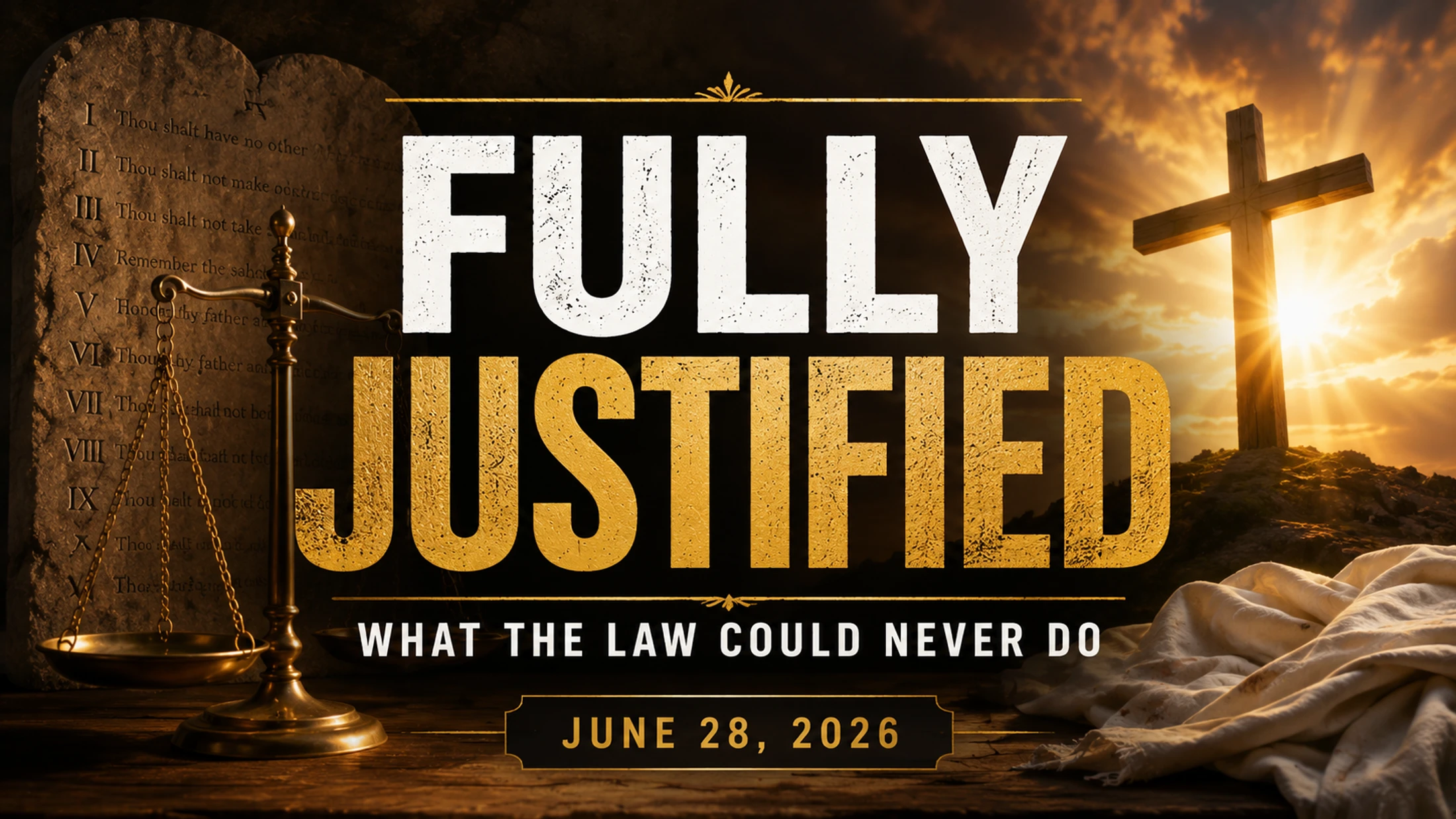
Fully Justified: What The Law Could Never Do, June 28, 2026
The Setup: Israel's Story as Paul's Opening Argument
Sermon number thirty-five picked up immediately where Set Apart left off, with Paul and Barnabas sailing on from Cyprus to Perga and then to Antioch in Pisidia, a different Antioch than the one that sent them. Notice that John Mark turned back to Jerusalem here without explanation, a small detail I promised would resurface later in Acts in a way nobody expects. I also pointed out who filled the synagogue that Sabbath, Jewish men who had grown up on Israel's promises alongside Gentile God-fearers, people who attended and believed but had never converted or been circumcised, standing on the edge of belonging their entire lives.
Paul stands up and, rather than starting with Jesus, starts with Israel's own history, walking the room from Egypt through the wilderness, the conquest of Canaan, the judges, and finally to King David. I called this Paul's opening argument, brick by brick, using stories this congregation already loved and trusted to show that every single one of them had been pointing toward one person the whole time. That gave the sermon its first point, that the Old Testament has always pointed to the coming of Christ, and I unpacked the Greek word soter behind Savior in verse 23, a title stamped on Roman coins and carved into monuments across the empire as Caesar's own claim to glory, which made Paul's declaration that Jesus alone is soter a politically dangerous statement to make out loud in a Roman colony.
Paul builds his case with four Old Testament texts across four centuries, Psalm 2's declaration that God's anointed Son was begotten, Isaiah 55's promise of the sure blessings of David, Psalm 16's insistence that God would not let his holy one see decay, and a warning from Habakkuk that some would refuse to believe even when told plainly. I shared my own story of resisting a call into ministry while studying autobody repair in Colorado, only to discover years later that the very classes I thought were wasted time had transferred directly into my Bible college degree and later opened doors to share the gospel with students who loved classic cars. What looks random in the moment is often deliberate from where God is standing.
That set up the second point, that Jesus rose from the dead exactly as the scriptures said he would. I walked through Paul's argument that David wrote Psalm 16 about someone other than himself, since David's tomb sat in plain view in Jerusalem and his body had plainly decayed, leaving only one honest conclusion: David was writing about a coming king whose body would never see corruption. Paul does not ask the room to take a leap in the dark, he points to living eyewitnesses of the resurrection who were still walking around and still willing to be asked directly, treating the resurrection as verifiable history rather than sentiment.
The sermon's third point turned on the word justified in verse 39, and I built a simple courtroom picture for all of us to carry home. Picture yourself as the defendant, the charge is sin, the evidence is airtight, and there is nothing you can offer in your own defense, until someone steps forward and tells the judge he will pay every charge himself, and the verdict comes back not as overlooked or forgiven with reservations but justified, treated as though the law had never been broken at all. I was careful to honor the law of Moses as holy and good while insisting it was never designed to close the gap between who we are and who God requires us to be, only Jesus can close that gap, and he already has.
I applied this directly to two groups sitting in the room, believers still living under the quiet pressure to perform their way into God's approval, and people trying to earn their way to God through good behavior alone. I told both groups plainly that the courtroom is not still in session, the gavel already fell, and no amount of additional effort adds anything to a verdict that has already been rendered in Christ. I tied the whole message to Brunswick itself, calling the town our own Pisidian Antioch, full of God-fearers standing at the edge of belonging in workplaces, neighborhoods, and family rooms all over the county.
Paul closes his sermon with a warning quoted from Habakkuk, that God is doing a work in that generation so extraordinary that some will not believe it even when told directly, and I applied that warning soberly to anyone ready to dismiss what had just been laid out. I reminded you that justified people cannot help but become generous people, no longer looking at someone standing on the edge and calling them not quite enough, but inviting them in the way Paul just invited an entire synagogue of Jews and Gentiles sitting together.
This Week's Application
So this week, are you still trying to close a gap between yourself and God through your own effort, when that gap was only ever meant to be closed by what Jesus already finished on the cross? We would love for you to join us this Sunday as we continue walking through Acts together.
The Crossings Community Church is a Southern Baptist church plant in Brunswick, Maryland, led by Pastor Justin Wyckoff. We meet Sundays at 11:00 AM at American Legion Post 96 on S Maple Ave. Learn more at thecrossings.cc.